Login
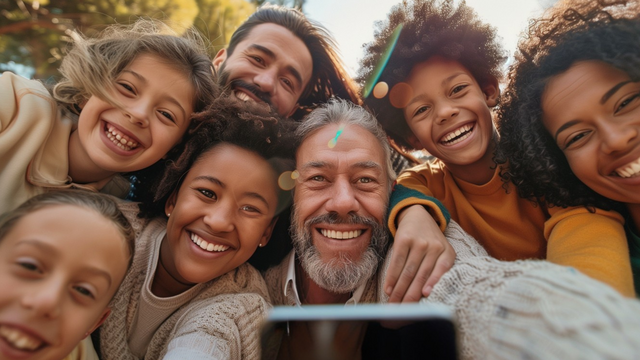
Taking photos and videos of your own children is part of everyday life for many families. The first smile, a birthday, a vacation or simply a beautiful moment - all of these are captured digitally. Parents mainly share these memories online with family, friends and acquaintances. When it comes to photos, video and audio recordings of children, it is important to pause for a moment and consciously consider: "Does my child really want this picture to be posted publicly or in the family chat?"But also: "Do I really want this?"
Because there are good reasons for not wanting to have pictures of your children online.
Promoting children's participation
Children are independent personalities with their own rights. Children should learn at an early age that they have rights and are allowed to make use of them. As a parent, I should ask my growing child: "Can I take a photo or video of you?" "Is it okay if I send or post the photo of you?" This teaches children to recognize their own boundaries, say no and determine what they want and what they don't want. It also shows appreciation and strengthens children's self-confidence. In turn, children learn that they also need to respect other people's privacy and not simply take and send pictures of others at random.
Children up to the age of six are not yet allowed to decide on their own how to deal with pictures of themselves on the internet and social media, so it is up to their parents to decide. But please do so with care and caution. Parents can then ask themselves: "Would I want a video of me in this situation to be shared publicly?" If the answer is "No", this also applies to children.
As soon as the children are 14 years old, parents must ask their children for consent, but they can still have a say in whether a photo is posted or not until the child is 16. Especially when it comes to not posting a photo, parents have the final say. According to the GDPR (European General Data Protection Regulation), children are (normally) allowed to make their own decisions about their data from the age of 16 and must be asked in any case. However, parents remain an important authority that should be involved until the child reaches the age of majority[1].:
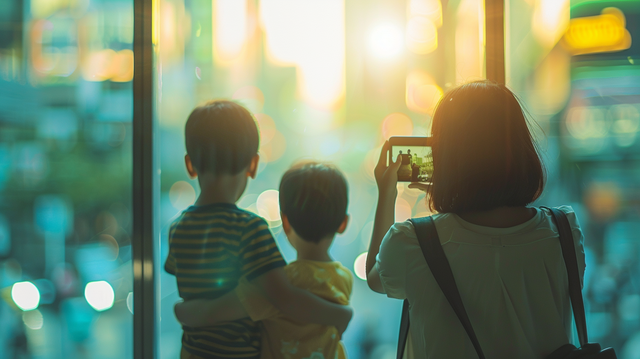
Children have the right to their own image and their own voice
What many people don't realize is that a child's voice is also considered a personal characteristic. A child can be recognized in videos, voice messages or short clips - even if their face is not visible.

The Internet does not forget easily
Even if content is deleted later, it may have been saved, forwarded or copied beforehand. Images in social networks and messengers in particular are stored on the providers' servers. The legal situation regarding the use of photos is not transparent, e.g. at Meta, which operates WhatsApp, Instagram and Facebook, among others. Meta uses the images for AI training purposes. This use must be actively objected to[2] [3]. The "digital footprints" can thus remain in circulation for many years. Thanks to AI, the images can now be easily changed and placed in other contexts. The metadata of the images also provides information about location, time and more.
What can help?
Images can now be edited so that clothing is removed from the photo and child pornography can be produced[4]. It is advisable to check the privacy settings of the services and only make photos accessible to close friends and family members.
If photos, videos or audio recordings are shared after all, measures can help to better protect children's privacy:
- Cover faces with smileys or stickers or make them unrecognizable by pixelating them
- Make voices unrecognizable, switch off the microphone or use music
- Do not show any embarrassing, vulnerable, very private situations, no nude photos
- Use privacy settings in social networks and messengers consistently and stay up to date with technical changes
- Do not mention names, birthdays, places of residence or schools
Involve grandparents and relatives
An issue that many parents are familiar with: proud grandparents who post photos or videos of their grandchildren on their WhatsApp status, in family groups or on social media - often well-intentioned, but without consultation. An open, respectful conversation can help here. Parents can and should be clear about what they want and don't want.
A simple rule can be: Photos, videos or voice recordings of children are only shared with parental consent - no matter by whom. This helps to avoid misunderstandings and sensitize everyone involved.
Learn more about digital topics and gain a better understanding of digital reality! Do our check-up now and learn more.

What to do if images or videos have been shared without permission?
Sometimes photos, videos or audio recordings of children and young people are published without the consent of the parents or the children themselves. This can happen on social networks, in messenger groups or on websites.
The first step can be a conversation: those involved are often unaware that they have done something wrong. A friendly but clear request to delete the content is sufficient in many cases. This clear request can also be made in writing with a deadline.
If pictures or videos are not removed voluntarily, parents can take action. Platforms such as Instagram, Facebook, TikTok or WhatsApp offer reporting functions that can be used to delete content - especially when children are involved. Website operators are also obliged to remove such content if it has been published without consent.
From a legal perspective, publishing images, videos or audio recordings without permission can be a violation of personal rights. In serious cases - for example, exposure, bullying or very sensitive images (e.g. nude photos, illness) - this may even be punishable by law. The law provides special protection for children here. Parents can seek legal advice in such situations, for example from consumer advice centers, data protection agencies or specialized counselling services. In the event of serious breaches of privacy or insults, a lawyer can be called in and the matter should be reported to the police.
Important: No one should accept content from children being circulated without consent. It is perfectly legitimate to demand deletion and seek support.
The protection of children always comes first.
Sources
[1] www.datenschutz-notizen.de/minderjaehrige-im-datenschutzrecht-3940384/
[3] www1.wdr.de/nachrichten/klage-meta-facebook-instagram-koeln-100.html, retrieval date January 9, 2025